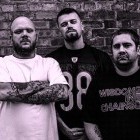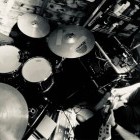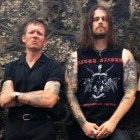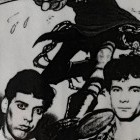
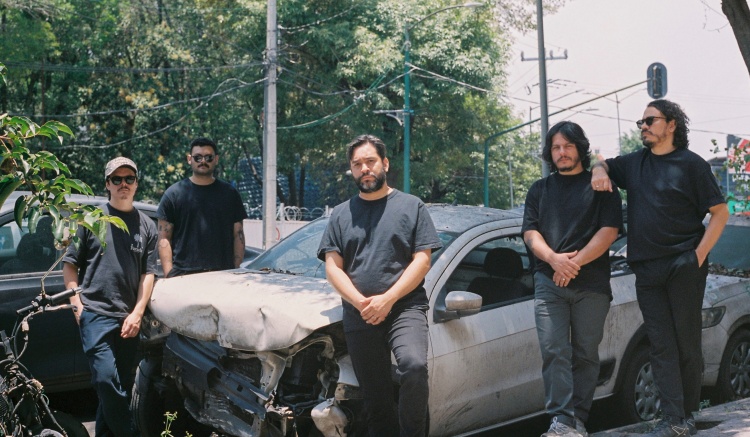
The Costa Ricans in Adiós Cometa are going two for two this year, following their earlier LP, Un Destello de Luz, with a split featuring Japanese band Cissné, a byproduct of a multinational friendship that goes back a few years. The result is a recording that mixes the heavier, melancholic sounds of the Japanese side before jumping into a mellow, yet still melancholic and atmospheric, track from the Central American side.
After the two-song split was released on Lauren Records, I decided to pick Emanuel’s brain again about how the release came to be.
First off, how did the alliance with Cissné come to be? Did Lauren Records have anything to do with this?
Not really! We originally stayed in touch because our first record, Nuestras Manos Son Incendios, and the first record by Hiiro’s old band, Fall of Tears, came out around the same time through the California-based label Daydream Records, back in 2024.
I (Ema) exchanged messages with him, and we talked about how much we enjoyed each other’s music. We also shared some demos, and that’s when the idea of doing a split first came up. That’s actually how I heard the demo for what would eventually become “Zero.” Their song was ready long before ours, so they had to be very patient while waiting for us! Later on, Lauren Records released Cissné’s first EP and eventually got involved with the split as well.
I think both bands really appreciate the idea of connecting dots and building bridges between places that might otherwise seem unlikely to intersect. From the very beginning, the idea of doing this split genuinely excited both bands, and I think that shared enthusiasm is what kept the project alive and moving forward for so long
I can hear a distinction between both bands’ sounds, starting off strong with the Cissné song “Zero” and then going into a mellower sound with Adiós Cometa’s “Uno.” Do you feel both bands complement one another?
I think we do! I really enjoy when a split brings together two bands that don’t necessarily sound similar but somehow share a common thread. It’s also kind of funny, and completely unplanned, that Cissné’s song starts out strong and gradually evolves into something mellow, while our song starts mellow and gradually evolves into something heavier.
What’s your take on sharing a release with a heavier-sounding band?
We all grew up listening to hardcore and metalcore, and some of us even played in bands in those scenes. You know, the typical experience of being in high school in the mid-2000s. Even though all of us expanded our musical tastes over time, I think that’s still the one common ground we all share. Also, I don’t know if this happens to everyone, but as you get older, you start appreciating the music you grew up with even more.
So those underlying influences have been there since the very beginning of the band, and we naturally tend to gravitate toward them. We’ve played shows and collaborated with hardcore bands. I even have a screamo project, so we’re still somehow connected to that scene. It’s not really a foreign idea for us. We genuinely enjoy doing stuff like this, and I don’t mean just working with heavier bands.
In general, we really value the freedom and flexibility to interact with bands and artists from different scenes and musical backgrounds. I think that’s what keeps things interesting.
There is a notably heavier element to “Uno.” How did this come to be? What drove you to this result?
If you’ve ever seen us play live, this outcome probably isn’t surprising to you!
Our live sound has traditionally been more aggressive than our recordings. The thing is, we started the band right before COVID, so we didn’t really have the chance to experience playing live. Instead, we focused on recording our first EP, La Isla Que Somos. It was produced by someone who had never really worked with anything heavy and mostly specialized in a crisp, clean pop sound, so the record ended up being very clear and polished. That wasn’t necessarily a bad thing. We actually appreciate it more in retrospect, but when we finally had the chance to play those songs in front of people, we realized it was nearly impossible for us to play them in that restrained form. The energy and euphoria of playing live naturally pushed us to play the songs faster, heavier, and noisier.
That also affected how we approached writing new songs, and with each new release, we’ve tried to recreate more of that live sound in our recordings. I think we got a pretty good result with Un Destello de Luz, which feels like a much more faithful postcard of what we sound like live.
I also think you can see the evolution of these influences throughout our music, from more emo-oriented songs like “Los Años Pequeños Días” and “Diente de León” on our first record to “El Mundo En Mis Brazos” on the new one, and even songs that kind of venture into metal territory, like “Mala Memoria” and “Victoria.”
For the split, we wanted to use this release as an opportunity to intentionally make a song where we could really let those influences loose. At first, we weren’t entirely sure what the right approach would be, but I think the final result feels very honest and natural.
What was the recording process like? Any bands you were listening to while writing “Uno”?
It was a very collaborative song. I wrote the guitar foundation for the first part of the song, and Gae, one of our other guitar players, wrote the foundation for the second half. We all polished the song and wrote some of the other parts during rehearsals and then recorded a home demo.
Mark and I wrote the lyrics and vocal melodies using that demo and finally went into the studio. We recorded drums and bass at the same time, then guitars, and finally vocals. The screamed parts were recorded in just one take because they came out so naturally that we loved them right away, and that was it.
Some of the bands we were listening to while writing “Uno” were Suis La Lune, Beau Navire, Brighter Arrows, Underoath, Pianos Become the Teeth, and Moving Mountains.
Also, is there a story behind the song titles?
Yes. Kind of. Like I mentioned before, Cissné’s song was ready long before ours, and it was called “Zero.” When we wrote ours, we liked the idea of calling it “Uno” (“One” in Spanish) because it added another layer of meaning to the split.
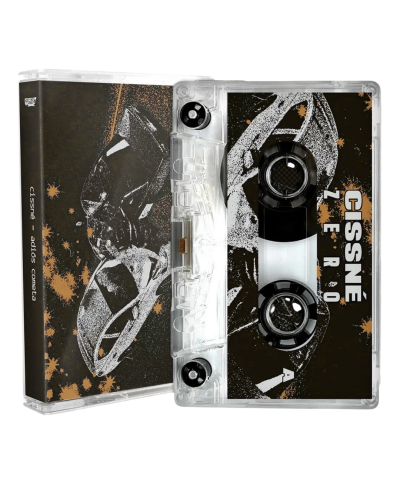
The concept of the split revolves around the idea of two different worldviews colliding with each other, offering different answers to the same questions. That’s why we have two cars crashing head-on on the cover. And in that context, the song titles can take on different interpretations.
What’s next for Adiós Cometa?
After releasing our second album earlier this year, we decided that we’d spend this year and next year focusing on some splits we’ve been talking about and planning for a long time, which is something that really excites us. So there will definitely be new music coming next year.
We’re also planning to release a live album and, of course, play as many shows as we can, both in Costa Rica and abroad.
***
The Adiós Cometa / Cissné split is available on vinyl via Lauren Records. Cassettes are on sale at Gerpfast Record.
Adiós Cometa on social media: Instagram

Tagged: adios cometa