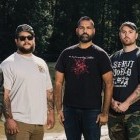
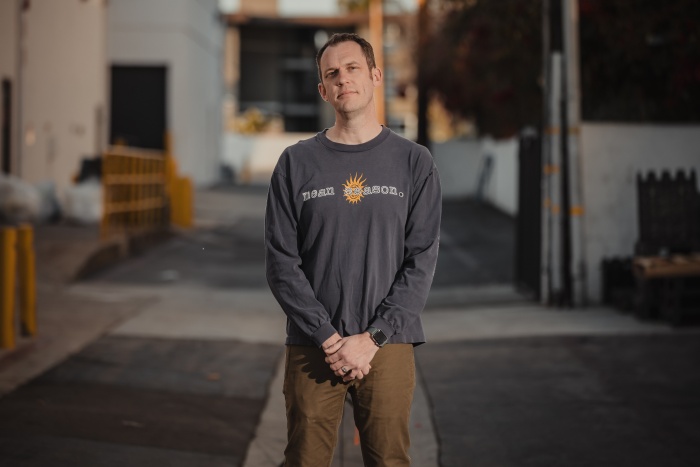
For nearly two decades, Ray Harkins has been talking with musicians, writers, and other creative figures through his 100 Words or Less podcast. An Orange County, California native, Harkins is also known for his work fronting the hardcore bands Taken and Bloodguilt, so he understands the culture from both a fan and musician perspective.
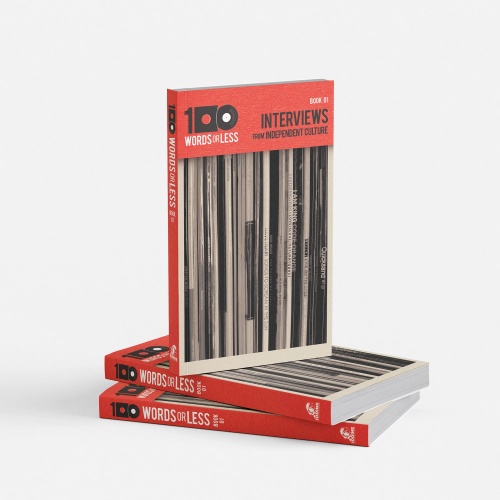
Now, 20 of those conversations are being collected in print for 100 Words or Less: Interviews from Independent Culture, published by Iodine Recordings.
I spoke with Harkins about turning the podcast into a book, digging through a treasure trove of interviews, how his approach has evolved, and the hardcore books he considers essential.
What was the spark that motivated you to get this project off the ground? Did you use any other podcast-to-book examples as a blueprint?
Bringing some of these interviews to print, as a zine or a book, was always in the back of my mind. The real spark came when I started thinking about how they fit together. We all dig into different creative pursuits, but our stories are remarkably similar, and I wanted something that told that story.
I kept pointing my collaborators to three books: All Ages: Reflections on Straight Edge, The Anti-Matter Anthology: A 1990s Post-Punk & Hardcore Reader, and Burning Fight: The Nineties Hardcore Revolution in Ethics, Politics, Spirit, and Sound. Those books were totemic for me.
Collecting those interviews in one place made our scene feel validated and, for lack of a better term, more substantial. I’d seen other podcasts turn their work into a book — shoutout to Washed Up Emo — but that wasn’t my main inspiration.
With such a vast archive to draw from, how did you choose the 20 interviews that made it into this first volume? I’m sure you knew right off the bat that you wanted to include a few.
To be transparent, I started by looking at my most popular episodes to see whether the data backed up my personal favorites. But I didn’t want to just print my top 20 by downloads. I wanted artists and creatives who work across different sounds, disciplines, and professions.
Some conversations jumped out right away, and a lot of them came early in the podcast’s life. For some guests, it was the first podcast they’d ever done, like Scott Vogel. In short, it was a mix of my favorites, the episodes that got the most feedback, and a push to make sure it wasn’t just 20 hardcore bands.
Listening back to some of the earliest interviews in the archive, did you get critical of your interview style or anything else? I liken it to a band hearing their demo or early material.
Of course! Everyone is their own worst critic, but I remember a specific turning point not long after I had Jordan from New Found Glory on the show in 2014. It was one of the longest interviews he’d ever done. We sat in his backyard, and he shared a lot about his personal life. When someone gets that vulnerable, you feel a connection.
I never pretended to be a journalist. I treat these conversations as living, breathing things, so sometimes I put more of myself into them, especially when someone is being open. After that Jordan Pundik episode, I got a lot of feedback from people who had only heard that one, and the gist was, “You talk about yourself too much.” (I’m paraphrasing and being much kinder than what was actually said.)
I didn’t do anything I was uncomfortable with. Some listeners just wanted a standard question-and-answer format. Since then, I’ve gotten better at knowing when to jump in and share and when to pull back.
How did Casey at Iodine become involved with the book? Did you guys already have a friendship from years past? How collaborative was the process?
I only knew Iodine Recordings in passing when they were first around. When they relaunched, Casey and I connected because he’d been listening to the podcast. He sponsored a few episodes, I got to know him better, and we became fast friends.
It’s been inspiring to watch him grow the label and finish what it didn’t get to do in the 2000s. He was putting out these deep, loving reissues of some stone-cold classic records, so after a few years of friendship, I brought him the idea, and he got it right away. It took me over three years to finish this, and he stood by me and supported me the entire time.
What are the three essential hardcore-related books you think every serious fan should have, and what makes each one important to you?
I’ll name the three I mentioned, plus a bonus:
- All Ages: Reflections on Straight Edge, by Beth Lahickey: This book made the case that something as fleeting as people coming in and out of hardcore, and straight edge specifically, was worth writing about and thinking about. I revisit it every five or six years and find new layers that speak to wherever I am in life. I’d like to volunteer myself to do the audiobook.
- The Anti-Matter Anthology: A 1990s Post-Punk & Hardcore Reader, by Norman Brannon: Norm is the reason I wanted to interview people in the first place. He got me writing for zines in the early 2000s like Law of Inertia, Status Magazine, and Wonka Vision. I had the individual issues, but when the book was announced, I couldn’t wait to have it all in one place, with extra thought and context around the interviews. I’m tempted to steal his question, “When was the last time you cried?” for every interview I do.
- Burning Fight: The Nineties Hardcore Revolution in Ethics, Politics, Spirit, and Sound, by Brian Peterson: This one was special because it put real rigor around that era of hardcore, told by the people who built it. I’ve always been drawn to people who don’t limit themselves to hardcore bands, and Brian talked to bands like Swing Kids and Racetraitor alongside heavy hitters like Earth Crisis and Cave In.
- Our Band Could Be Your Life, by Michael Azerrad: It isn’t strictly a hardcore book, but when you read the Sonic Youth and Hüsker Dü chapters next to Black Flag and Minor Threat, you can see how tangled up those scenes were. Hardcore is bigger now than it’s ever been, but it all grows from the same roots.
***
The 100 Words or Less: Interviews from Independent Culture book is available via Iodine Recordings.
100 Words or Less podcast on social media: Instagram
Tagged: book