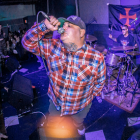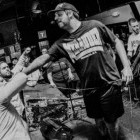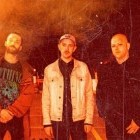
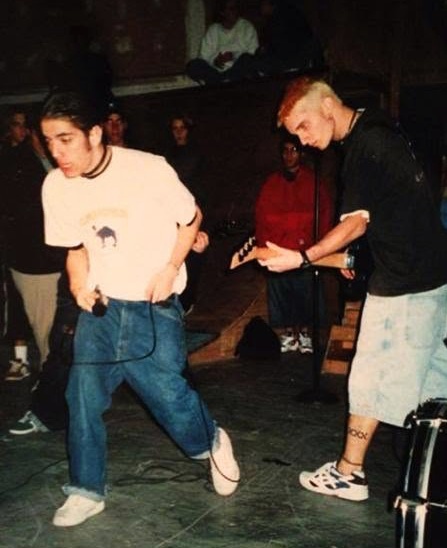
Three decades later, Damien Moyal is back fronting Morning Again, the South Florida metallic hardcore band he left in 1996 after recording their only two releases with him on vocals.
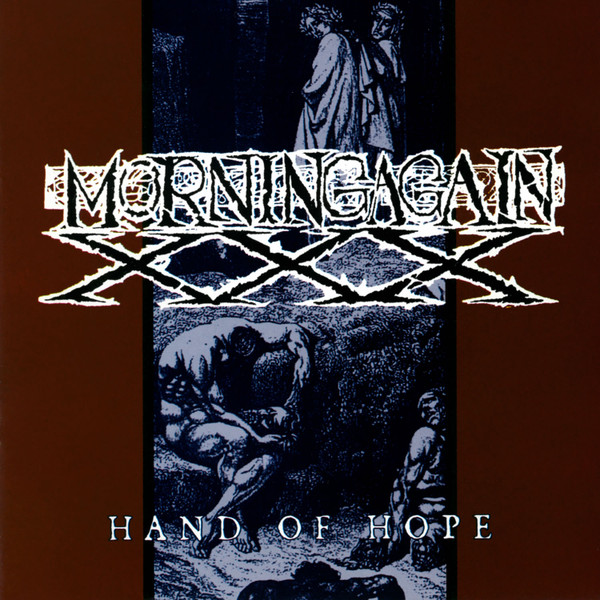
Moyal's return comes as Morning Again approaches a milestone: 2026 marks 30 years since the release of The Cleanest War, their five-song debut EP for Conquer the World Records, and the Hand of Hope/God Framed Me 7" on Intention Records. Those seven tracks were later collected as Hand of Hope by Belgium's Good Life Recordings in 1997.
“We've all been in touch throughout the years, and since a couple of the guys were also Culture members, we've been able to play music and travel together as Culture on occasion,” Moyal tells No Echo. “I first stepped in to cover on vocals back in April, and a bit later was asked to return.”
Returning to Morning Again meant more than dusting off a few songs from his teenage years. Moyal was in the band for less than a year, but the group has had a strong recording and touring history since his departure, with singer Kevin Byers. Meanwhile, the singer stayed busy, with an impressive résumé that includes As Friends Rust, Damien Done, Shai Hulud, Bird of Ill Omen, and the aforementioned Culture.
No Echo asked Moyal if stepping back into the frontman role with Morning Again felt a bit like riding a bicycle. “I was pretty nervous! I was in the band for less than a year, and they've had 30 years of history since. Tons of releases, years of touring,” Moyal admits. “I'm pretty practiced at being replaced (Shai Hulud, Morning Again, Bird of Ill Omen), but inheriting decades of catalog is a new experience for me.”
Listening back to The Cleanest War all these years later, you can hear Morning Again already leaning heavily into thrash metal and the more metallic side of the era's hardcore scene. But for guitarist John Wylie, the band didn't approach their style with a calculated plan.
“I don't recall us ever discussing what we wanted the band to sound like, honestly,” he tells No Echo. “I will say, personally, at that time I was listening to a lot of Slayer, Sepultura, Earth Crisis, Chokehold, and Rage Against the Machine. I think all of those played a big part in those songs coming to life as far as my contributions.”
Wylie and his Morning Again bandmates clearly were not interested in whatever bullshit "hardcore rules" of that era. “I think the songs turned out as good as they did because we didn't set limits on what we were doing. We played what we felt. We were excited about music, hardcore, and creating.”
For Moyal, Morning Again felt like a natural extension of what he was already doing with Culture. “I don't remember ever having any conversations about direction, but I think it was kind of assumed it wouldn't be much of a departure from the chugging, metallic lineage of Culture,” he says. “John already had some music written when we started, and I wasn't surprised at all that they were thrashy or Slayer-coded. I would have been more surprised if they weren't.”
Bassist Eric Ervin saw it the same way. “Obviously Slayer was an inspo, and just the bands we were into at the time,” he says. “I was a fan of Culture and just stoked to be doing something with members.”
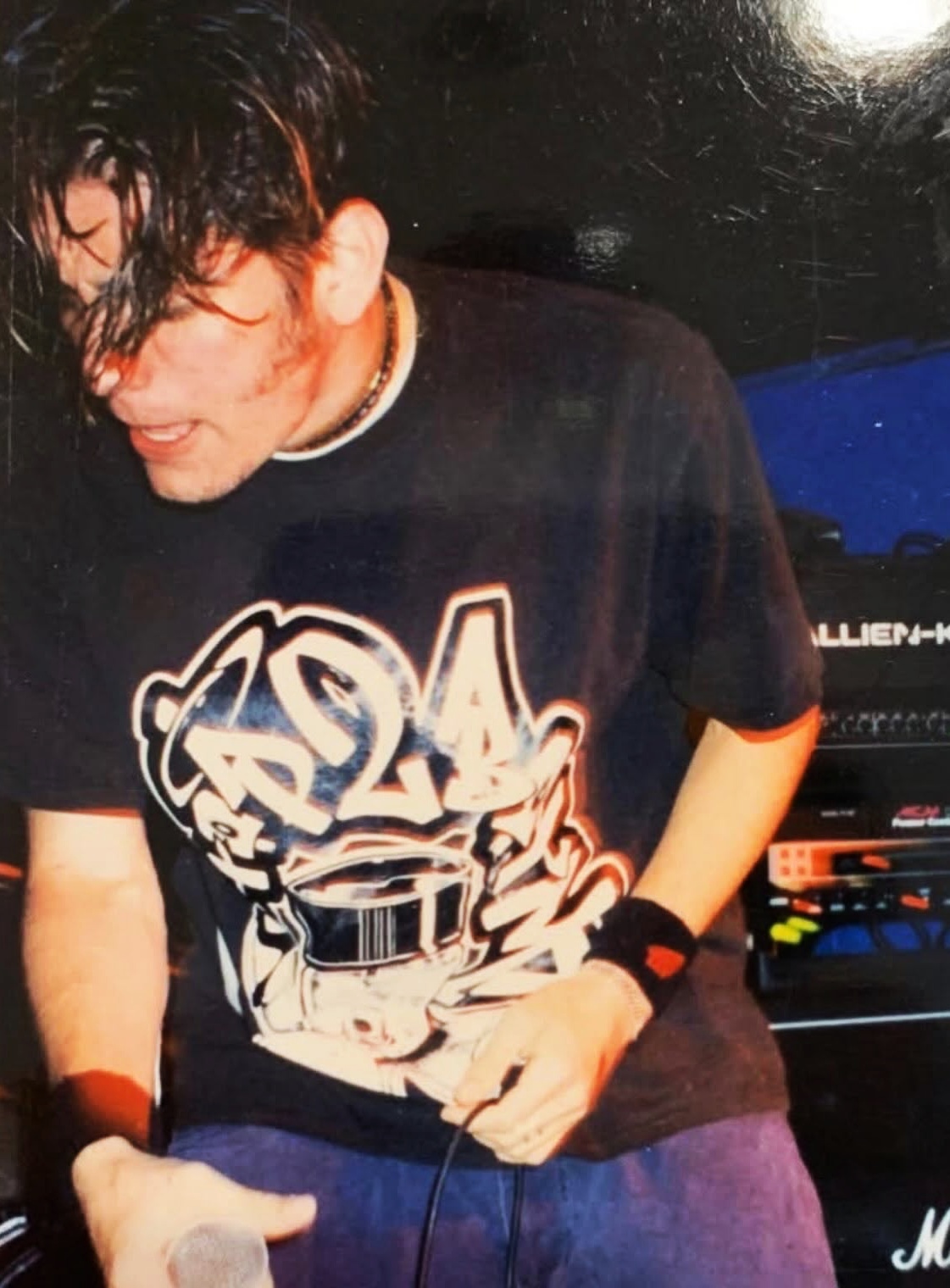
While the band's sound came together naturally, Moyal was more deliberate about the lyrics. All the members were straight edge and vegan, but Moyal wanted to avoid adding more songs about those topics to the already crowded '90s metallic hardcore scene. He looked for new ground.
“While we may not have had a musical direction in mind when we started, I do remember deciding against writing songs about veganism or straight edge, despite each member observing those lifestyles,” he explains. “It just felt like well-worn territory, and I was interested in addressing topics we weren't hearing much about in that ‘new school’ metallic hardcore space.”
The Cleanest War ended up covering everything from capital punishment to technology and family prejudice. One track looked at state execution through the eyes of a parent whose child was murdered. “America On Line” warned about the risks of technology dependence, back when Moyal didn't even own a computer.
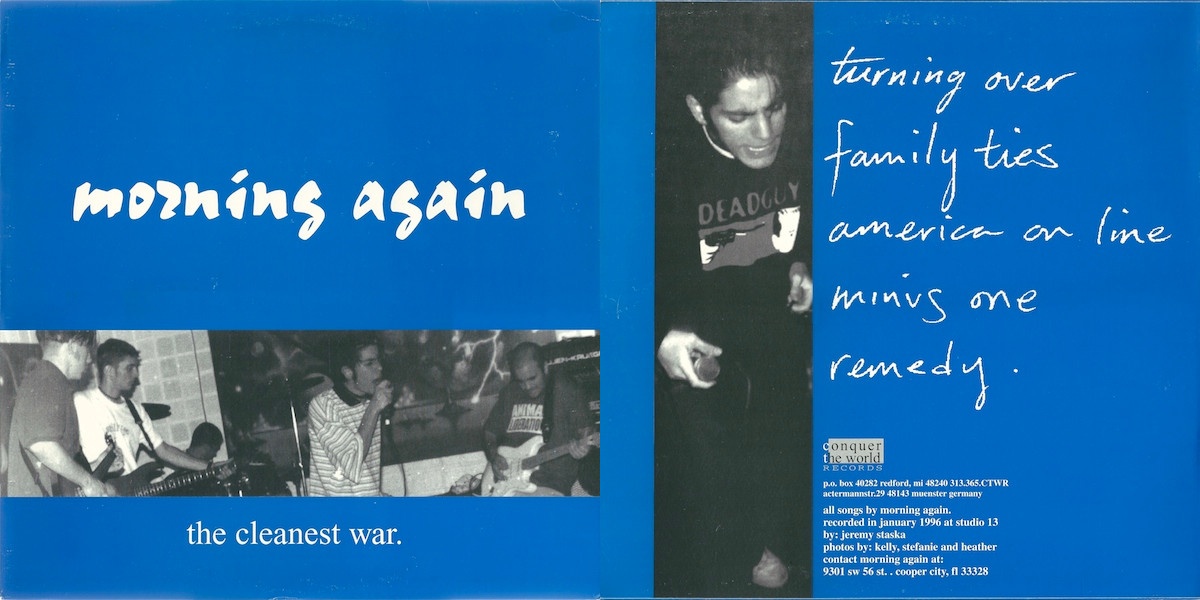
Then there was “Family Ties," a song No Echo was especially curious about finding out about.
“‘Family Ties’ was inspired by tales of bigoted parents rejecting or disowning their kids for deviating from their views,” Moyal explains. “Coming out of the closet, disavowing racism, marrying interracially, denouncing faith. The protagonist in the song comes to the heartbreaking realization that his family will never accept him, and that the only shot at peace and disrupting the cycle of prejudice was to give up on them and to move forward, alone.”
Though they certainly were not a Christian band, tthey still grew close with Strongarm, another Florida band, despite clear ideological differences. “We were good friends with everyone in Strongarm,” Wylie recalls. “I think this is a great example of how we didn't agree on our politics/religion at all but were still good friends and supported each other as people. Friendship came first, and we were lucky to share so many experiences with them.”
READ MORE: The Strange History of Christian Hardcore
Moyal remembers the relationship similarly, although his favorite example of their ideological coexistence is considerably funnier. “Definitely Strongarm, who were friends and contemporaries in a fairly small scene. They tolerated our disdain for religion like champions,” he says. “You haven't lived until you've seen Chad [Neptune], bassist of Strongarm, grab the mic to scream ‘Trash your cross!’ at the end of ‘God Framed Me.’”
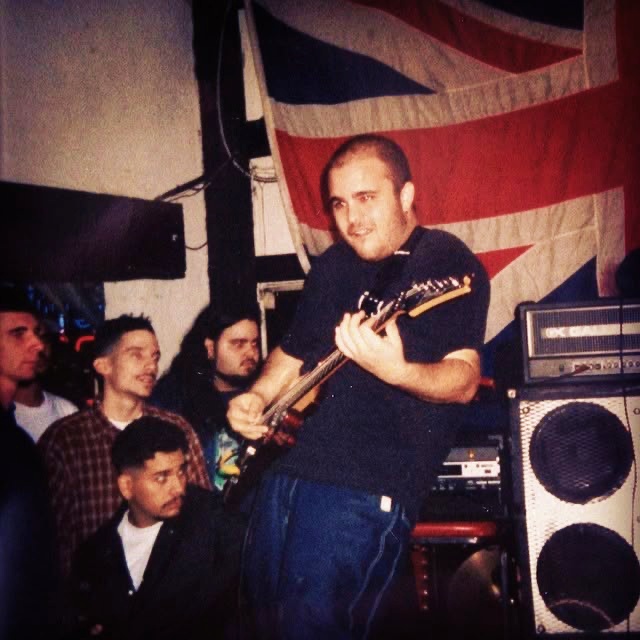
Morning Again tracked The Cleanest War with Jeremy Staska at Studio 13, a studio that would later become a fixture in South Florida hardcore and punk. Back then, both the band and Staska were still learning.
Ervin tells No Echo the studio setup was surprisingly primitive. “I remember recording the amps all in the same room as the drums, but he isolated the cabinets with random crates and such,” he says. “I remember thinking, weird, but what do I know! He definitely was the go-to guy for so many bands back then, that for me it felt somehow like it was kinda big time to be at Studio 13.”
The bassist also loved the oil and water aspect of the collaboration. “He had long hair and sort of a stoner vibe, and we were a straight edge band. I always got a kick out of that.”
Wylie considers Staska the right person at the right moment. “Jeremy was great. Metal guy. Probably the best local person at the time to record our style of music,” says the guitarist. “He was always still learning and always very knowledgeable. I feel very lucky to have been able to work with him so much.” Wylie also remembers Morning Again's 1998 As Tradition Dies Slowly album being Staska's first time recording with Pro Tools.
Moyal doesn't try to polish his memories of those early sessions. “Jeremy was awesome. That was another relationship that carried over from earlier days, as we'd been in there several times with Culture,” he says. “He was affordable, easy to work with, and understood heavy music.
"The recordings get a bit sloppy here and there, but we were young and working on limited funds and zero impulse control. I wouldn't have those sessions any other way. That's the realest documentation of the speed at which time seemed to move back then; the immediacy of everything we did.”
The seven tracks from Morning Again's 1996 releases found a new home in 1997, when Good Life Recordings collected them as Hand of Hope.
For Moyal, that was the start of a connection with European hardcore that would continue to flourish for him and his bandmates in the decades to come.
“Edward from Good Life reached out to both Morning Again and Culture at the same time, and we both came over to Europe at the same time in 1997, even playing a handful of shows together,” he recalls. “I'm not sure how our bands got visibility in Europe in the first place, but we quickly realized there was a kindred (Belgian pun intended) spirit between what the H8000 scene was doing and what we were doing in South Florida.”
READ MORE: H8000 Hardcore: 10 Records That Helped Define the Movement
Wylie was surprised by how well Morning Again connected with audiences overseas. “I agree that it really started with the Good Life releases. We were very surprised how well the band was received and how many great bands we played with and met,” he says. “Morning Again has brought me many things over the years. Spending time in Europe playing music, meeting people and seeing new places is at the top of that list.”
Coming back to these songs after thirty years was already a challenge. For Moyal, it also meant learning material recorded by his successor, Kevin Byers.
Rather than trying to imitate what Byers had done, Moyal found his own way into those songs. “I delivered the vocals my way and tweaked some phrasing here and there. The quality of Kevin's voice is pretty different from mine, but there was a lot of continuity in how the vocals were arranged,” he says.
What surprised him was how naturally some of the unfamiliar songs fit. “I wasn't super familiar with some of that material, but because John's riffs were among the first I ever really sang to, I'm sort of innately hardwired to know what goes where,” Moyal explains.
“That was a cool thing to learn about myself and my history with John since the Culture days while digging into the songs; that even where there may not be muscle memory, there's a kind of motor transfer that made learning the songs really natural.”
And when asked which song captures the essence of Morning Again's earliest period, Wylie doesn't hesitate:
"‘God Framed Me’ was the song that best represents the band from that era,” he says. “That and ‘Turning Over’ have always seemed to be the favorites.”
***
If you want to learn more about this era in Morning Again's history, check out this episode of the First Seven Inch Club podcast.
Morning Again records and merch are available at RevHQ.
Morning Again on Spotify and Instagram.
Tagged: morning again