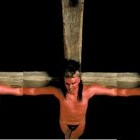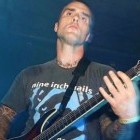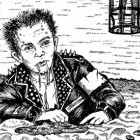
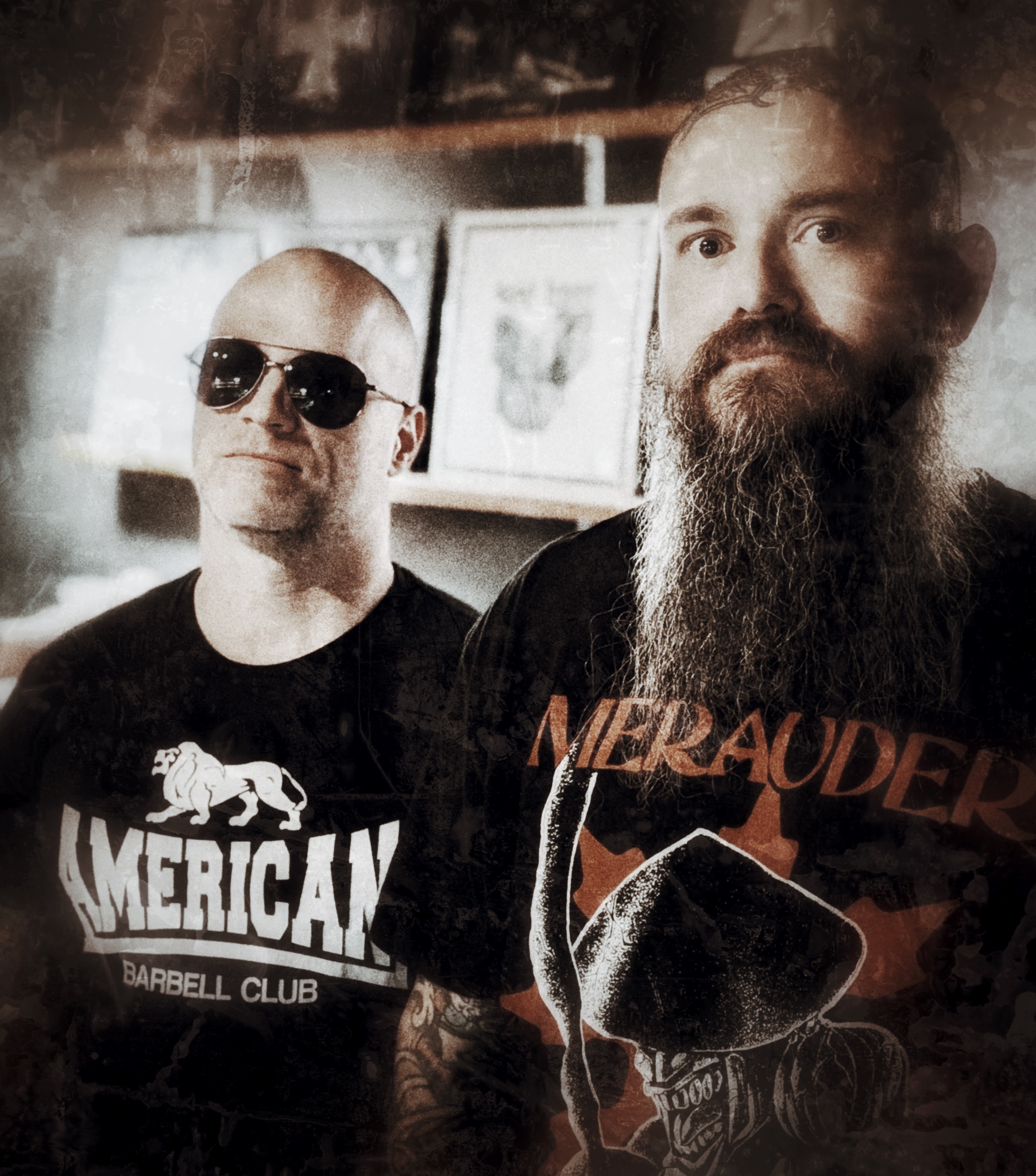
Daniel Austin is best known as the vocalist of Texas hardcore band Die Young, but he also plays guitar in Will to Live alongside Chris Hatfield, who previously played in Pride Kills. Earlier this year, the two launched Mr. Charisma, a decidedly different project with Hatfield on vocals and Austin handling the instrumentation.
Drawing from outlaw country, dark folk, and artists like King Dude and Me and That Man, Mr. Charisma has released a pair of EPs featuring original material alongside covers of Motörhead and Social Distortion.
Their new My Father's Son EP continues that approach with an original title track and reworked versions of Life of Agony's “River Runs Red” and Pride Kills' “Life of Hate.” The latter brings things full circle for Hatfield, who played guitar on the original Pride Kills recording.
I spoke with Austin and Hatfield about Mr. Charisma, revisiting “Life of Hate,” True Detective's influence, and how getting older has changed the way they approach songwriting.
Chris, you originally played guitar on Pride Kills’ “Life of Hate,” and now you’re revisiting it in a completely different musical setting. What was it like to strip the song down and hear it take on a new form all these years later? Did approaching it this way reveal anything about the original you hadn’t noticed before?
Chris Hatfield: What's funny about “Life of Hate,” and a lot of hardcore songs, is that I've always sung them on long drives or around the house as slower, country-style songs. I think hardcore/punk music is already very emotional, and when you strip it down and change the tempo, you get a really raw sound.
The way Daniel arranged “Life of Hate” really brings Gabe's lyrics to a different level. Instead of the traditional angst and rage of hardcore, it comes off to me like someone who's finally found somewhere they belong and the feelings that come with wanting to protect that.
Mr. Charisma draws on outlaw country and dark folk, but you both come from hardcore. What have you discovered about those worlds that makes them more compatible than they might seem at first? Does something about hardcore songwriting translate particularly well when you turn down the volume and distortion?
Daniel Austin: It can. It just depends on the song. But folk, punk, and rock in general are mostly the same style of music played at different levels of distortion or intensity. It's mostly chord-progression-dominated songwriting with a verse-chorus-bridge structure, so there is a ton of material you can transform in any direction.
I feel like I am developing a sense for what can best translate to folk and what doesn't. What I consider “heavy” or “hard” changes with age, too. Take a Nick Cave or Leonard Cohen ballad, especially the songs Cohen wrote as he was dying of cancer or the songs Cave wrote after losing his son. What could be heavier? Or when Johnny Cash sings “Thirteen” or Merle Haggard sings “The Fightin' Side of Me.” Those are confrontational songs that either smack you with the truth or take you into a dark headspace, much like hardcore.
The feeling in songs like that is every bit as heavy and intense as Crowbar riffs or 'The Age of Quarrel'. And really, what ties all these genres together under one umbrella for me is the emphasis on lyrics. If the words are heavy, then it is heavy music.
Yeah, I get what you mean. You’ve covered Motörhead, Social Distortion, Pride Kills, and now Life of Agony’s “River Runs Red.” What makes a song feel like a Mr. Charisma song waiting to happen? Are you looking for something in the lyrics or the melody, or simply wondering what it would sound like if dragged into your world?
Daniel: Part of it is, “How well does the song play when slowed down?” Chris is always reminding me to slow the fuck down—because I tend to write faster demos than I realize from playing hardcore all these years. Chris is always reminding me to play things slower, “like Crowbar,” he says [laughs], and to give him more space for the feeling in the words, which is a big factor in letting his vocals shine.
What's being said in the song also matters. We're really only interested in sad songs that feel like they come from a real, forlorn place. Can we take an already sad song and make it sadder? That's what's fun to us. We have zero interest in happy music.
Our covers of Motörhead, Social Distortion, and Life of Agony already had melancholy or straight-up miserable lyrics, but what I like about our versions is that we made them sadder by taking the loudness out of the equation. We want to get to the sadness beneath the rage.
The fun thing about this Pride Kills cover is that it's originally an anthem of working-class frustration, so it wasn't necessarily sad, but the way we did it feels like a consolation for the realization that when the world at large doesn't give a shit about you, you may as well go out and get yours for yourself. There's loneliness in that kind of realization, I think, and the acoustic guitars with Chris's vocals expose that angle. I don't think we realized that emotional dimension in that song until we did the first demo.
The original Pride Kills track, for the record, is one of the greatest songs ever written in Texas hardcore, by far. We're just riffing on its greatness and hope this helps some new ears find the original.
Daniel, you mentioned that True Detective has been a major influence on the project’s lyrics and imagery. What about that first season’s world still resonates with you, and how has it influenced the way you write beyond simply referencing characters or themes from the show? My wife and I consider it some of the best television we've ever seen. So good!
Daniel: All the portrayals of good and evil in that first season—the imperfect good and omnipresent treachery in the world—created a biblical-level allegory for a new generation to discuss. It's very much a Joseph Campbell-esque hero's journey for the grimy modern era, where truth is no longer easy to define.
I know that sounds like over-the-top praise, but It's a powerful story about trying to turn the dial toward a better world. Which is an eternal story because nothing will ever be perfect.
My favorite line from that season is: “The world needs bad men. We keep the other bad men from the door.” That's a heavy and brutally realistic way to think about morality. Maybe people can do good, but no one is all good, not even the best of us, so maybe we should reserve judgment on others as much as we can and try to do whatever good we can...because things can always be worse. If we don't do the good we can, things will definitely be worse. That's what I continue to take from it [laughs].
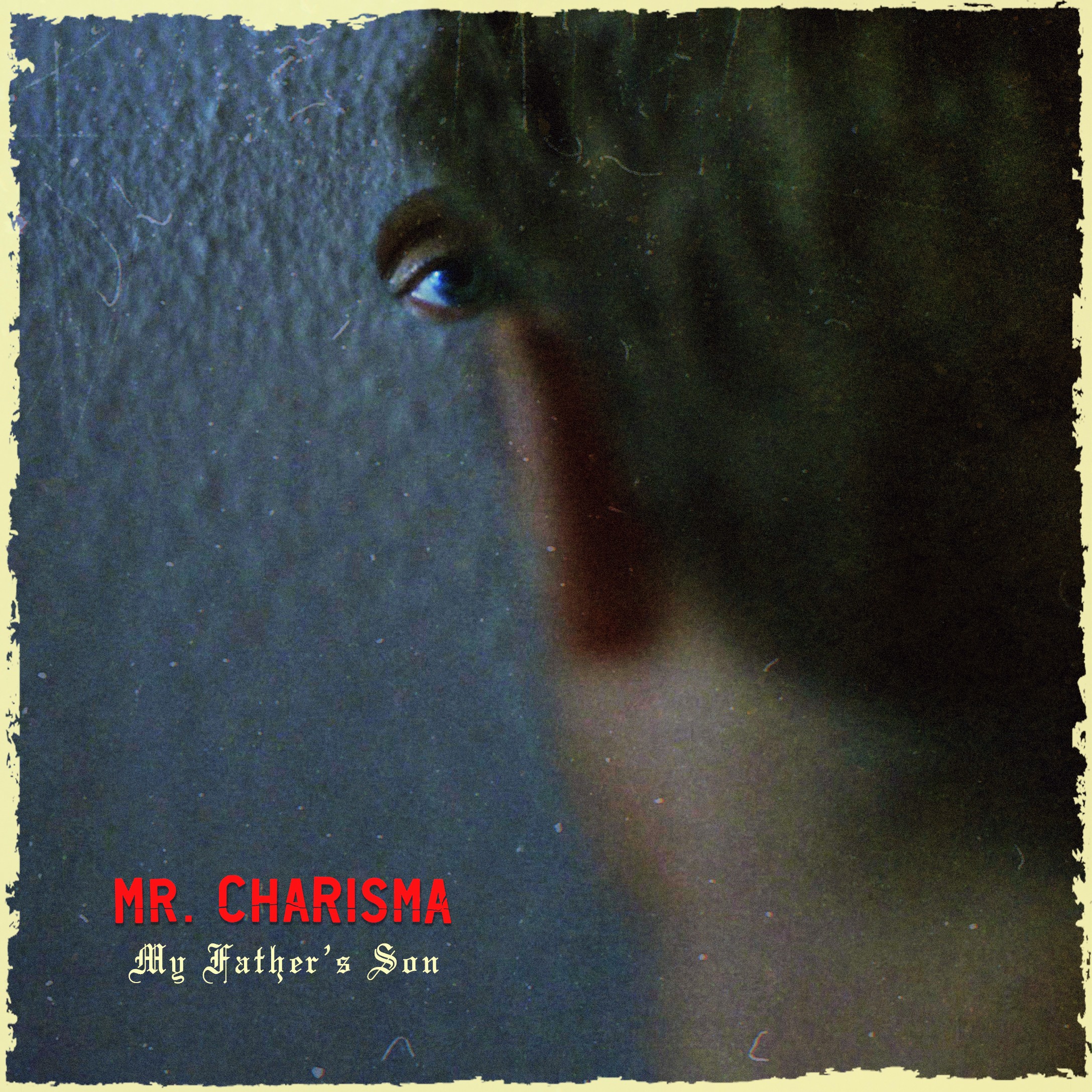
The EP is titled My Father’s Son, which immediately sounds more personal than some of the imagery surrounding the project. What’s behind the title track, and does it reveal another side of Mr. Charisma that we haven’t heard on earlier releases?
Daniel: It's personal, for sure, but it's also universal. Or near-universal. Maybe not everyone makes peace with their family as they age, but it's a song written for anyone who ever felt like all they wanted to do was get away from where they were from, disregard what their parents were telling them, and try to be their own person, like how Henry Rollins talks about “definition through redefinition.” Redefining yourself. It's a youthful impulse.
But then you get to your 40s, like Chris and I now, and you realize, “Shit, my dad was kinda right” [laughs]...and damn, he was right about a lot of things. And that allows you to realize that though you might have been raised by imperfect people, the truth is they actually did their best for you, whether you recognized it growing up or not.
For me, that's a source of both peace and pride at this point in my life.
***
My Father's Son EP hits streaming on October 15.
Mr. Charisma on social media: Instagram
Tagged: die young, mr charisma, will to live