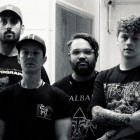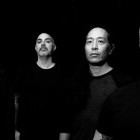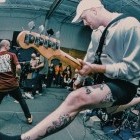
For almost 30 years, Allan Reid has been a fixture in the Australian hardcore scene. His history in the community dates back to 1998, with stints in bands such as Just Say Go, Frame, and most recently, Timepeace.
With What Silence Knows, he returns to the fast, no-frills hardcore that first pulled him in as a teenager, channeling the energy of Chain of Strength, Mouthpiece, and the tradition of European straight edge. Reid sent me a link to the What Silence Knows demo, and it was an instant replay for me. With the glut of beatdown and deathcore-inspired bands in the scene today, it’s refreshing to hear one who favors speedier tempos, shorter songs, and go-for-the-throat energy in the vocal department.
In the interview below, Reid talks to No Echo about hearing Gorilla Biscuits through his brother’s wall, his draw to Norwegian and European hardcore, how What Silence Knows came together, and what it means to stay involved in hardcore after decades in the scene.
Talk to me a bit about your personal introduction to hardcore music. What were some of the bands/records that you remember first truly connecting with?
My introduction to hardcore came through my older brother in the late ’90s. We grew up on the Sunshine Coast on Australia’s east coast. My brother was into bodyboarding and skating, and through that, he heard about hardcore and punk through the backing tracks on bodyboarding and skating videos.
In 1996/1997, my brother started drumming in hardcore bands with his friends. He played in Defused Aggression, Untamed Youth, and Common Filth. Dustin, who sang for Untamed Youth, was one of the first people I recall really deep-diving into hardcore as a local kid. As he was finding out about bands, he would order their records and dub copies to tape for my brother.
I remember hearing a lot of the Fat/Epitaph punk bands from that mid-to-late ’90s era through my brother playing them at home and not really connecting. There was a bratty/snotty element to those bands that didn’t connect with me. I’m quite earnest at times, and the comical side of that ’90s skate punk scene didn’t click for me.
At some point in late 1997 or early 1998, Dustin dubbed a tape for my brother with Guttermouth on one side and the Gorilla Biscuits 7-inch on the other. I remember hearing Gorilla Biscuits through my brother’s bedroom wall and being hooked. I stole that tape and listened to it until it was chewed up.
The bands I first got into were mostly the early Revelation bands and ’97 revival bands. Learning more about Gorilla Biscuits opened me up to Youth of Today, Insted, Sick of It All, No For An Answer, Chain of Strength, Shelter, Turning Point, etc. Following that, I discovered bands like Ten Yard Fight, Ensign, Floorpunch, Count Me Out, In My Eyes, Reach the Sky, Standard Issue, etc.
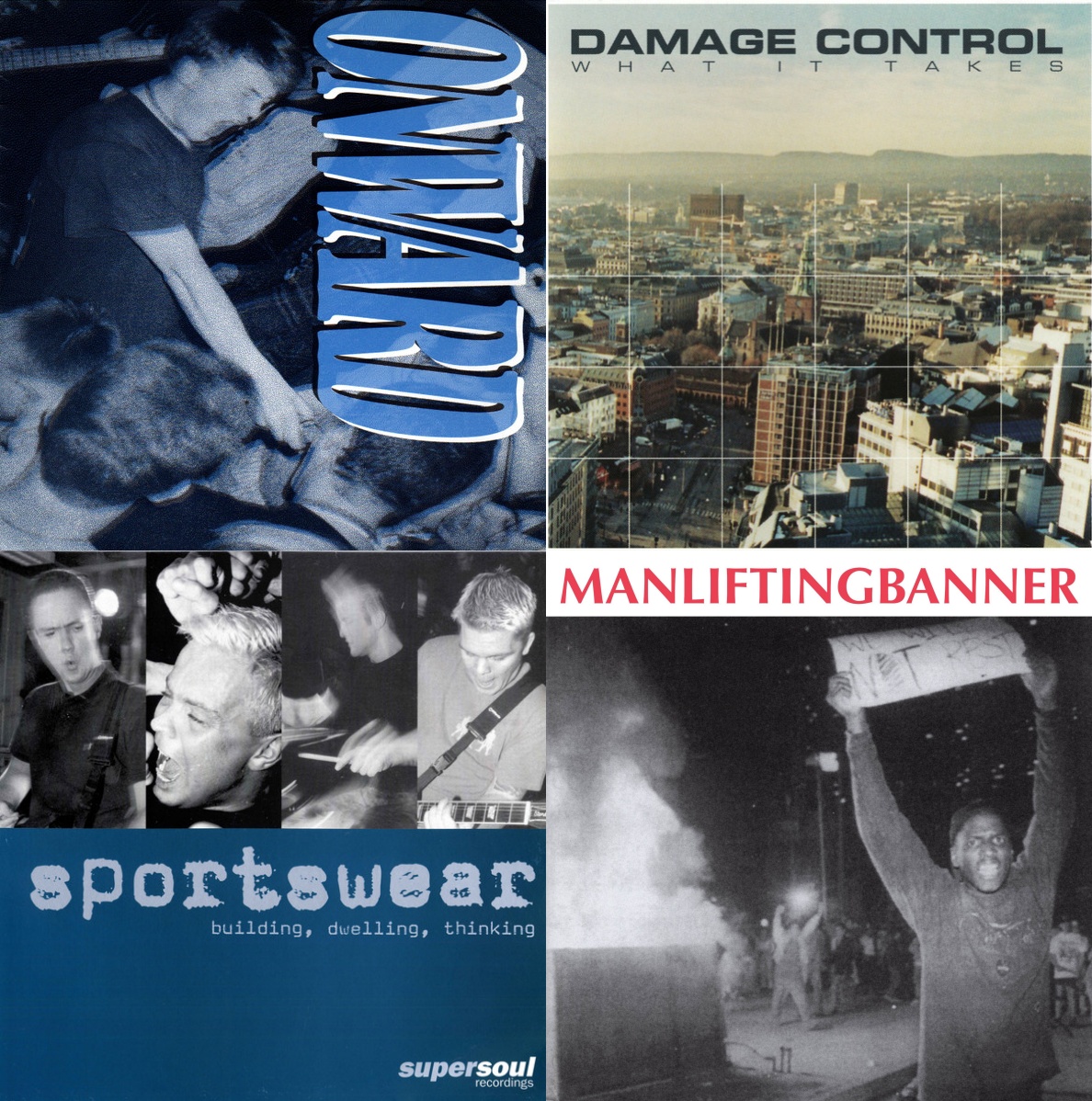
A big turning point for me was discovering the abundance of bands that had come from Europe, especially the Crucial Response Records back catalog. I started digging into the European scene a year or two after discovering hardcore. Damage Control are one of my favorite bands, and the bands that the Oslo crew have done over the last 30–40 years rank highly on my list of favorite hardcore bands: Sportswear, Subject to Change, Onward, Eyeball, Rectify, Tiebreak, Mainstrike, and Common Cause.
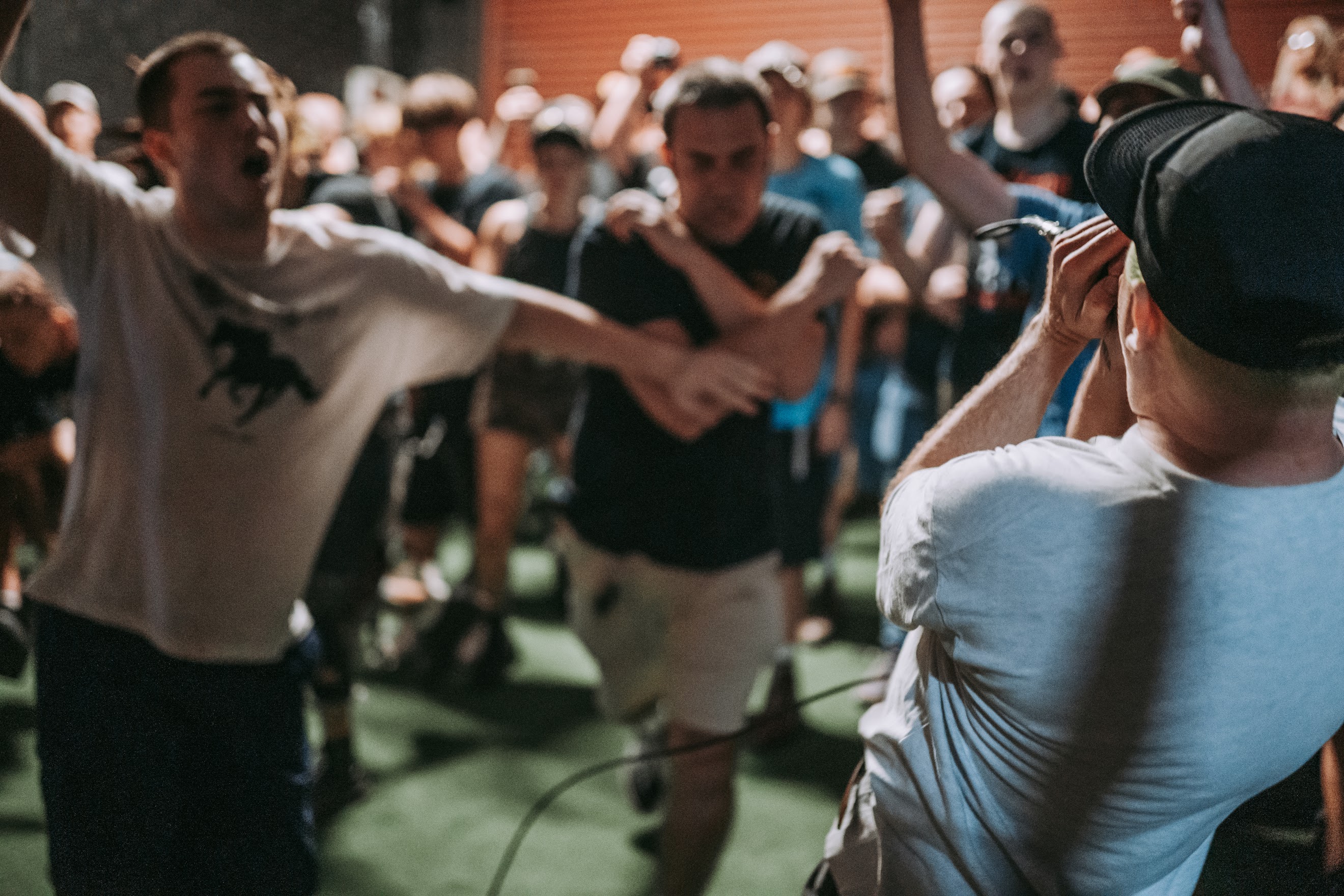
I know you also play in Timepeace with Robyn Challands, who hosts the No Barriers radio show over there in Australia. What other bands have you played in throughout the years?
I joined my first band in 1998 and have been fairly consistently in bands over the last 28 years. For the most part, my bands have been influenced by the bands I mentioned earlier.
In chronological order, I’ve been in:
- 1998 – At All Costs (vocals)
- 1999–2001 – A Step Apart (vocals; not the Dutch band)
- 2001–2002 – At AYou Glance (guitar)
- 2002–2006 – Live Today (guitar)
- 2003 – Together (guitar)
- 2003–2008 – Just Say Go! (vocals)
- 2003–2004 – xThe Warx (guitar)
- 2006–2012 – Connections (vocals)
- 2009–2012 – Fires of Waco (vocals)
- 2009 – Values Here (bass)
- 2013 – It Runs Deep (guitar)
- 2022–2024 – Frame (guitar)
- 2024–current – Timepeace (guitar)
I’ve also filled in for a couple of bands over the years, including Against, Empower, and Something Inside.
What’s the origin story behind What Silence Knows?
Charlie and I played in a band that came undone in pretty dramatic fashion in early 2024. The response from the local scene was pretty intense, and I wasn’t really in a great place when it all came down on us. I was ready to sell my gear and step back from playing in bands for a while, but Charlie kept chatting to me about doing something new. We eventually worked on some new ideas that became Timepeace with the addition of our friends Meg, Robyn, and Dustin.
Between our last band breaking up and Timepeace forming, we made a deal to write and record two demos using our different abilities. We’d each steer our own project stylistically and work together to record the tracks. What Silence Knows is my side of this deal.
Over the last year or so, I’ve pieced together the songs in terms of guitar, bass, and vocals and bounced them off Charlie for his input and feedback. Working on the songs without a band around meant I reached out to a couple of friends for feedback, including Robyn and Erle.
Robyn is a powerhouse in terms of her contributions to hardcore, is very musical, and is extremely adaptive. Robyn was interested in playing bass for the band. She has played bass for Timepeace for a cover while our bass player, Meg, sings. Meg has one of the most brutal voices in Australian hardcore, so we gotta showcase it! This is Robyn’s first band as an out-and-out bass player.
Erle and I have been friends for over 20 years but have never played in a band together. We’re both hardcore nerds, and Erle’s early bands were my introduction to Youth Crew-influenced hardcore in Australia, primarily Next Step and Sense of Purpose.
When Erle heard the rough tracks, he was keen to play bass, but we’d already locked Robyn in. I proposed that he play guitar instead of bass. Erle was keen, which locked in the band's lineup.
When it came to recording the demo, I recorded and mixed it myself. This was my first attempt at recording a release, and it was a really fun experience. Charlie and I got together before he went on tour in Europe with his other band, Hacker, and knocked out the drum tracks in a couple of hours. For those who don’t know, Charlie is a man of many, many talents, and his drumming is no exception.
Will at Dead Air Studios mastered the tracks and knew it was my first attempt at recording and mixing. Will did a great job mastering the tracks and accounting for my shortcomings, since this was my first attempt.
The other side of the deal Charlie and I made in 2024 is a band called Sawdust. Charlie is the driving force behind that project, and stylistically, it will be heavy ’90s hardcore, with Charlie handling vocal duties. I’m really excited to see what Charlie does with the vocals. He’s shown me some of the lyrics for Sawdust, and they’re unreal. I wish everyone could have a Charlie in their life!
My initial impression of the demo when you sent it to me a few days ago was how much I love this style of speedy, straight-up, tough-yet-catchy hardcore. Chain of Strength is an obvious touchstone, but you also mentioned a specific strain of Norwegian straight edge hardcore that influenced this new project.
Going into the project, my reference points were Chain of Strength, Onward, Mouthpiece, and Mainstrike. I wanted to combine the sonic and stylistic influence of these bands with my own spin.
The name of the band comes from an Onward song. The members of Onward form part of a group of hardcore stalwarts from Oslo who’ve played in some of my favorite bands. These bands include Onward, Sportswear, Rectify, Damage Control, Subject to Change, Soulfire, Common Cause, For Pete’s Sake, Tiebreak, and currently Modern Love.
As mentioned earlier, my introduction to hardcore was heavily based around American bands. Discovering hardcore from other regions of the world really opened my eyes to the impact of locality and regional culture on hardcore.
While there are the obvious differences in sound, style, attitude, and ethics between early East Coast and West Coast hardcore from the U.S., there are also unique sonic, stylistic, attitudinal, and ethical attributes among the early pioneers of European hardcore.
When you look at the context around bands like Lärm releasing music in 1984, Seeing Red releasing their LP in 1990, Think Twice forming in 1989, Onward forming in 1989, Manliftingbanner forming in 1989 or 1990, and the Profound Dutch Wolfpack cassette and Integrity 7-inch being released in 1989, there is a significant lineage of hardcore to explore. Some of the stories around the who, what, where, when, and why certain bands and scenes exploded make for a really cool journey.
I’d say that my interest in and love for European hardcore is equal to, or greater than, my interest in and love for the American classics. It’s such a rich, deep history, with dynamics that are unique to the continent.
How about the lyrics? What can you tell the readers about the demo material and the band’s mindset on that front?
Lyrically, the demo has two angles to it. The first is how to capture the essence of hardcore as someone who has been involved for a couple of decades and hasn’t retired yet. How do I see hardcore, and how do I navigate the changes within the scene while still being involved and active? How do I cut through all of the noise of gatekeeping, subgenres, commercial infiltration, and social media-focused hardcore and still find the things I love about it?
One of the first lyrics I wrote for the demo was, “I need to know what this means to me, not what this means to you. If this means nothing to me, there’s nothing more for me to do.”
I think that lyric speaks to my perspective on navigating hardcore as someone who’s lived through a couple of generations and iterations of it.
What are the plans for the band for the rest of the year? Will the demo get a physical release? Shows?
We’ve made 30 copies of the demo on cassette and 30 copies on CD. Our friend Moose from the Dupe Shop put together the tapes for us and did a phenomenal job. If you’re not aware of Moose’s bands, do yourself a favor!
The demo is all but sold out. We have a couple of copies left on CD, and the cassettes are sold out. We’re preparing for our first shows sometime between now and the end of 2026, with a few options in the works.
As a band that includes members of other bands and is, for all intents and purposes, a side project, we’ll play shows here and there but likely won’t become a busy band.
People constantly complain about “TikTok hardcore” and a general trendiness that is attracting new people to our community here in the States. What are your thoughts on that, especially from an Australian hardcore perspective?
One of my core beliefs about hardcore is that you can tell whether someone is a hardcore kid or not by how they treat someone who is at their first hardcore show.
The reason I believe this is because there are always people in hardcore who are focused on status, hierarchy, and self-gain. I don’t believe there’s a scene in the world where there isn’t a contingent of participants portraying themselves as hardcore kids who wouldn’t think twice about kicking down at people within their own community to get ahead. It’s a sad truth of modern hardcore.
The reason I believe you can identify a true hardcore kid by how they treat someone who is at their first show is because hardcore is always going to be infiltrated by the outside world, whether that’s TikTok or music industry people looking for commercial gain. That’s not in my control, and I’m not going to fight against it.
What I can do is act accordingly in the spaces that I navigate. Whether a kid finds hardcore through someone two-stepping to pop music on social media or through a zine, I’m going to approach them in the same way.
I believe that’s how we maintain the culture, values, and ethics of hardcore. To quote the almighty Raybeez, “In our minds and in our hearts, we feel that hardcore music should stay out of big business and stay in the streets, where it belongs.”
People might not understand that when they turn up to their first show, but the examples we set and the ways we engage should help them understand that before they leave.
***
What Silence Knows on social media: Instagram

Tagged: hacker, timepeace, what silence knows